~180
Description
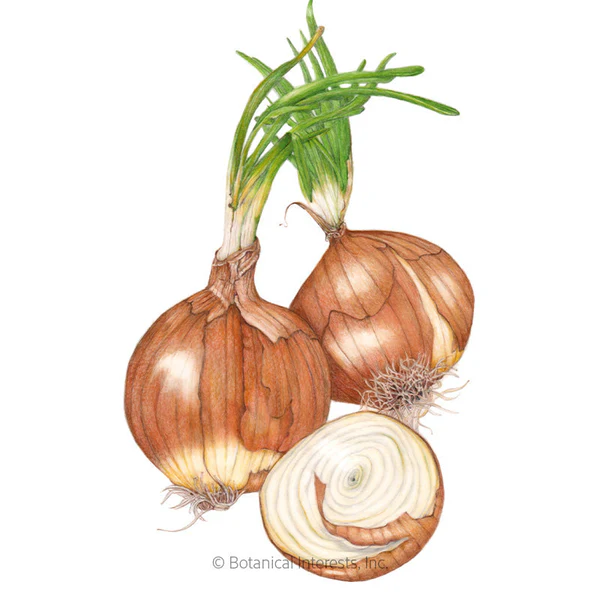
The ‘Sweet Spanish’ onion was grown in the U.S. at least as far back as 1916. ‘Yellow Sweet Spanish Utah’ is from that early type, producing large, 3”–6” globe-shaped bulbs with amazingly mild, sweet flavor. A long-day variety, it grows best in states north of the 37th parallel. Utah designated this onion the state vegetable in 2002. Caramelize onions for the perfect patty melt condiment.
Variety Info
Days to Maturity: 110–130 days
Family: Alliaceae
Scientific Name: Allium cepa
Type: Long-day sweet storage onion.
Native: Exists only in cultivation
Hardiness: Biennial grown as an annual
Exposure: Full sun
Plant Dimensions: 3 1/2” to 6” globe-shaped bulbs with 12” to 16” tops
Variety Info: Large, 3 ½”–6”, up to 2 lbs., pale yellow, globe-shaped bulbs with coppery wrapper; 12”–18” tops. ‘Yellow Sweet Spanish Utah’ is a bulbing, yellow, long-day onion with a moderate storage period.
Attributes: Frost Tolerant
Sowing Info
When to Sow Outside: 4 to 6 weeks before your average last frost date, or as soon as soil can be worked; when soil temperature is at least 45°F.
When to Start Inside: RECOMMENDED. 10 to 12 weeks before your average last frost date. Transplant outdoors 4 to 6 weeks before your average last frost date. The earlier the start, the bigger the bulb. Ideal soil temperature is 60°–85°F.
Days to Emerge: 7–15 days
Seed Depth: ¼”
Seed Spacing: A group of 2 seeds every 6”–8”
Row Spacing: 12”–16”
Thinning: When 2” tall, thin to 1 every 6”–8”
Growing Info
Harvesting: When onion tops have fallen over and turned yellow or brown, they are ready for harvest. Harvest in the morning, lifting onions with a garden fork. Dry them in the garden in the sun for 2 to 3 days, lightly covering the bulbs with straw, or the tops of other onions to prevent sunscald. Cure onions for 3 to 7 days in a dry area with good air circulation. Once dry, cut the roots to 1/4”, and the greens to 1” to create a seal, preventing decay.
Notes
When starting these seeds, omit using cells. and just scatter plant in a tray. The roots are relatively easy to split up, and the plant is very forgiving when transplanting.