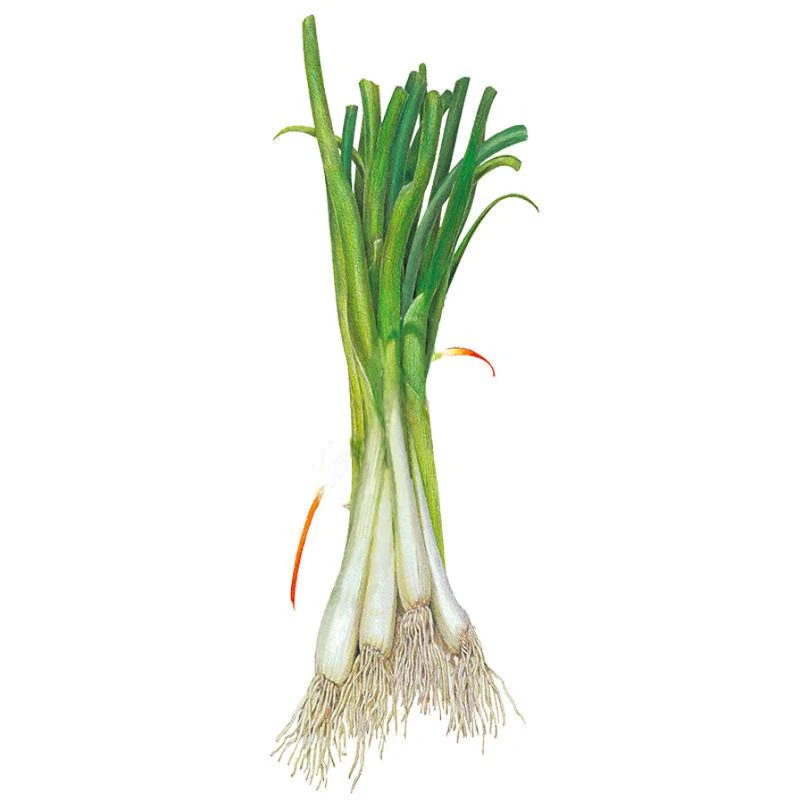
Description
These Japanese scallions are long, slender, and mild. Slice these sweet onions and juicy, bluish-green tops into salads, soups, stews, and stir-fry dishes. Ideal for summer and fall harvests, heat-tolerant plants can be blanched in the garden or a container for 16”–18” long, white, leek-like stalks. Disease resistant to pink root and smut.
Variety Info
Days to Maturity: 65 days
Family: Alliaceae
Scientific Name: Allium fistulosum
Native: Likely originated in eastern Asia
Hardiness: Perennial for hardiness zones 6, 7, 8, 9
Exposure: Full sun
Plant Dimensions: Medium (12” - 24”)
Variety Info: A Japanese favorite prized for long white stalks bursting with flavor. A versatile addition to fresh or cooked dishes.
Attributes:
- Good for Containers
- Frost Tolerant
- Pink Root Resistant
- Smut Resistant
Sowing Info
When to Sow Outside: 4 to 6 weeks before your average last frost date or as soon as the soil temperature reaches 45°F, ideally 60°–85°F, and every 2 to 4 weeks recommended for continuous production. In Mild Climates, sow in fall for spring harvest.
When to Start Inside: 8 to 10 weeks before your average last frost date; transplant 4 to 6 weeks before your average last frost date.
Days to Emerge: 10-15 days
Seed Depth: 1/4”
Seed Spacing: 1/4”
Row Spacing: 12”
Thinning: Not necessary unless thicker whites are desired
Growing Info
Harvesting: For repeated harvests of bunching onion greens, clip plants about an inch above the soil surface, and they will regrow. After cutting, apply fertilizer that is higher in nitrogen than phosphorus and potassium to encourage rapid regrowth. Bunching onions of the species Allium cepa can also form a bulb if given the time and space. To grow bulbs, harvest entire plants, leaving 3”-4” of space between the plants you want to remain and produce bulbs.
Notes
When starting these seeds. omit using cells. and just scatter plant in a tray. The roots are relatively easy to split up, and the plant is very forgiving when transplanting.