Synopsis
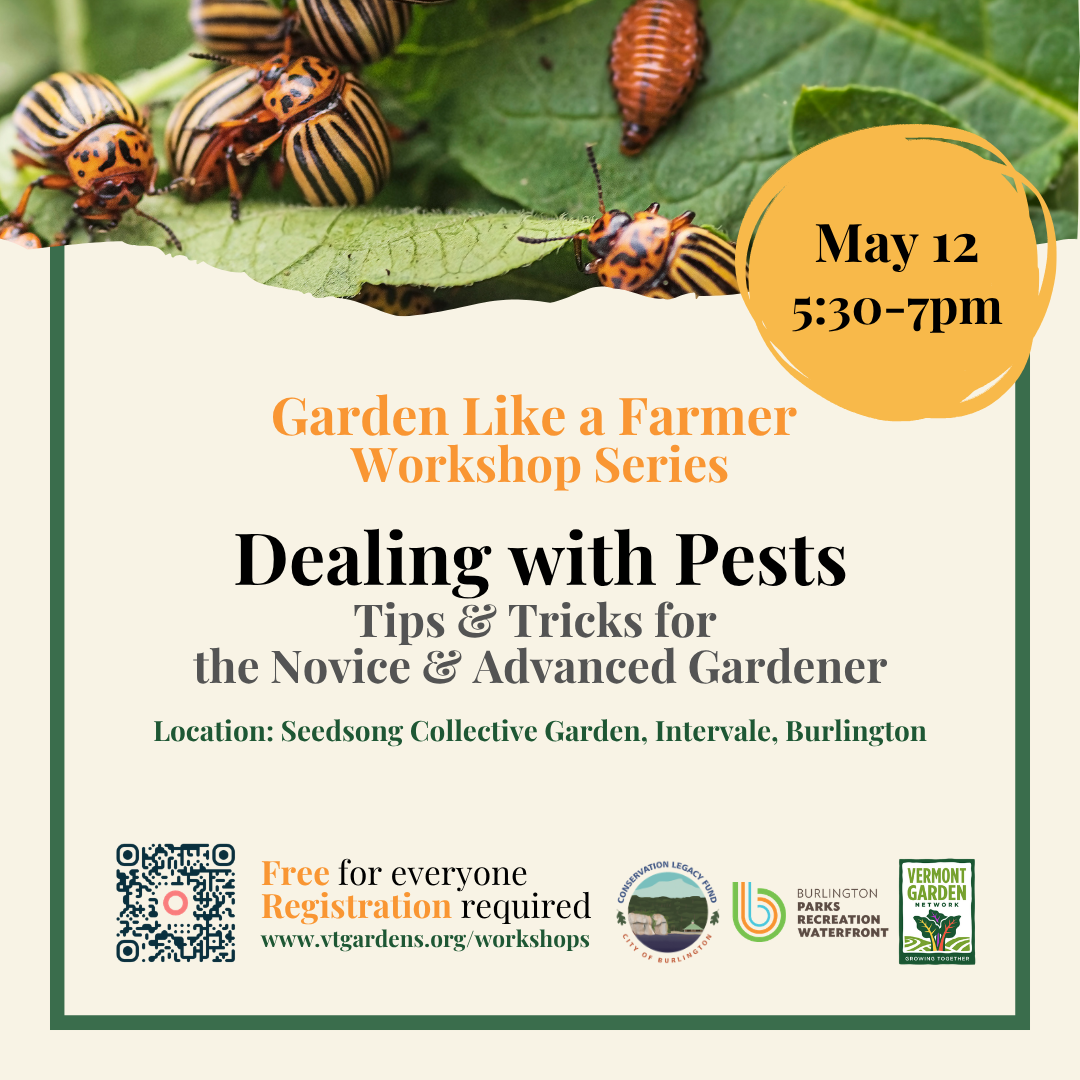
Join Vermont Garden Network for a hands-on workshop to identify common pests in vegetable gardens and make a strategic management plan. We will explore how to select and appropriately apply various low-tech strategies such as: selecting resistant varieties, attracting beneficial predators, using row cover, and shifting your planting dates. We will focus on some of the most prevalent vegetable pests, including: flea beetles, leaf miner, Colorado potato beetle, cucumber beetle, swede midge, and leek moth. Come prepared to scout for pests and share your own experience dealing with pests in your garden!
Taken at the Seedsong Collective Garden in the Intervale Center. Presented by Carolina Lukac (carolina@vtgardens.org).
More info found at: Vermont Garden Network.
Key Takeaways
- Carolina highly recommends using Sluggo if you see a Slug. That is the only chemical will will immediately go to and skip the Pyramid of IPM Tactics.
- Most companion plants are anecdotal. One of the few with scientific backing is planting onions with brassicas.
- Picking the right plant variety matters
- For kale avoid Red Russian. This one is notoriously attractive to petsts
- Squash borers really like the following squash:
- Leek moths have less of a preference for red onions
- Use row covering:
- The time to use row covering is when you first plant seed or transplant the plants to the garden.
- Use landscape staples to keep the cover on. Do not pierce the cover. Recommend getting thick staples with long forks
- Stretch fabric taught. When putting fabric through loop it once to secure. Push excess fabric under.
- Can use stones or bricks for extra security
- Plants that can use row covering
- Cabbage. Especially napa cabbage
- Onions if you care. Not a concern for Carolina
- Broccoli
- Bok choy. Any vegetable with fuzzy leaves
- Possibly spinach if swede midge is bad
- Delayed cropping can be a good preventative measure. Let the pests eat your neighbors plants
- For instance, potatoes can be delayed to as late as the solstice to avoid the Three-lined potato beetle
- Making the sure the plant is big enough and ready, the soil is healthy, and it is the right time to plant can all go into preventative measures. Carolina recommending planting calendars. I think using the ideal/minimal soil temperature for a plant will also help.
Actions
- task Pull out squash (Cucurbita maxima and Cucurbita pepo) at the end of the season 📅 2026-11-01
- task Bring a jar of soapy water when going to the garden
- task Some pests can be forecast. Look up a warning system
Learned about the Integrated Pest Management (IPM) triangle
Never heard of this, but there is a Pyramid of IPM Tactics.
Info from the workshop
You see damage…
→ Is it a yield problem? → Is it being caused by an insect? → What do you know about that insect?
Pest Identification
- Pest vs beneficial insect
- Life cycle
- Host plant / preferred diet
Integrated Pest Management (IPM)
- Cultural - prevention
- Physical - barriers, traps, hand picking
- Biological - predators, pollinator gardens
- Chemical - sprays
Cultural
- Follow planting guides and calendars
- Select resistant varieties
- Crop rotation & field sanitation
- Delayed planting
- Trap crop
Physical
- Yellow sticky traps
- Hand picking
- Powders
- Row cover
Biological
- Attract beneficial insects that are predators/parasitoids
Chemical
Be sure… → It is a yield proglem → It is being caused by an insect → You are informed about that insect → You act sustainable and strategically
Pests to watch out for
- Flea beetle
- Leafminer
- Slug
- Swede midge
- Colorado potato beetle
- Three-lined potato beetle
- Leek moth
- Cucumber beetle
- Mexican bean beetle
- Squash bug
- Squash vine borer
- Hornworm
Follow up email
Carolina followed up the workshop with an email providing more links that she referenced:
Plant Partners: Science-Based Companion Planting Strategies for the Vegetable Garden, by Jessica Walliser
Northeast Vegetable Pest Identification Guide
UMass Extension - Scouting Guides for IPM Field Walks - Alliums (other crops on website too!)
UVM Master Gardener beneficial insects + pests
Article on squash species, to remind everyone to learn as much as you can about varieties that are less susceptible to pest pressure.
Upcoming Garden Like a Farmer workshops will be announced soon. Here is a preview:
June - Mulches
July - Gardening with Future Farmers (aka KIDS!)
August - Cover Cropping
September - Perennials
October - Garlic